 2014 turns out to be the year where I break free from all the ..but surely I can't .. whispers at the back of my head. I am fully self-employed, I have been part of all sorts of incredible craft events with properly big knitting names, and now I've released my first garment pattern. Designing garments always felt daunting because they have to fit across sizes, there are all sorts of things to keep track off, and (crucially) they have to fit people other than me.
So, say hello to Scollay.
2014 turns out to be the year where I break free from all the ..but surely I can't .. whispers at the back of my head. I am fully self-employed, I have been part of all sorts of incredible craft events with properly big knitting names, and now I've released my first garment pattern. Designing garments always felt daunting because they have to fit across sizes, there are all sorts of things to keep track off, and (crucially) they have to fit people other than me.
So, say hello to Scollay.
Scollay is published in the latest Knit Now magazine (issue 41, in shops this week). I have a long-standing working relationship with the editor, so I knew I could trust the editorial team to be on-board with my first garment and lend me moral support. And I really think we got it right.
The inspiration behind the cardigan is two-fold.
Firstly, I knew I wanted an everyday cardigan which would work as a layering piece. I am mildly obsessed with "the everyday wardrobe" where you have some some amazing essential pieces you go back to again and again. I wanted to design a cardigan I knew I could just put on - I think we all have those garments that only work with a certain shirt and I wanted to avoid that.
Secondly, I was hugely inspired by the work of Louise Scollay who runs the Knit British website and podcast. Louise champions the idea of using local yarns and is very vocal about how supporting local yarns is both affordable and sustainable. I knew I wanted to use a local yarn for my cardigan - and then the name of the pattern became obvious: Scollay. I have an interview with her coming up on this blog where I'll be asking her just how it feels to have a pattern named after you!
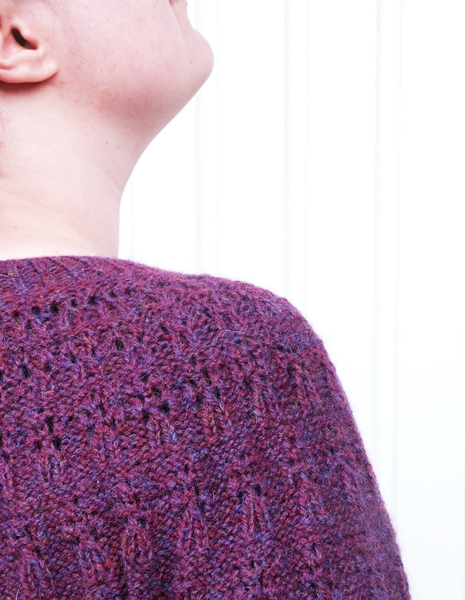
The Scollay cardigan is knitted in New Lanark DK which is spun just down the road from me. New Lanark is a UNESCO Heritage site which spins its own yarn using the Falls of Clyde to power its mill. It is not a coincidence that I chose to work with this yarn - I have visited New Lanark many times and the site holds special significance to me. Scollay's seamless construction cuts down on the amount of yarn you need and New Lanark is astonishing affordable at just £3.50 per ball. £3.50 for a piece of British industrial heritage, Scottish progressive social history and a yarn imbued with landscape, history, meaning, locality, and soul?
Oh come on.
A few suggestions for modifications. The cardigan is knitted bottom-up with the sleeves and body joined before you work the yoke. This sort of construction allows for relatively easy mods:
- the cardigan hits me well below the hips (as you can tell) but I am really short-waisted. If you want a slightly shorter cardigan, take out an inch before and after the waist shaping.
- you can adjust the length of the sleeves by taking out a couple of inches before you join the sleeves to the body.
- it is designed to have a smidgen of positive ease because I wanted a cardigan that would work for layering. The model in the magazine looks super-cool in her relaxed fit cardi. However, I am wearing the cardigan with an inch of negative ease.
- I do love the New Lanark yarn with a fiery passion, but it has a lot of character which I understand is not for all people (though it works perfectly for me). If you are looking for a substitute, you need to look for a double-knitting yarn with good stitch definition and memory. The construction means the yoke bears the weight of the garment, so make sure you find a substitute with sturdiness - cottons and silk-blends won't work in the long run.
It is such a thrill to finally be able to blog about the cardigan. I designed it in the spring and knitted it during the hottest Scottish summer in memory (I am modelling it on a hot July day in these photos ) - so it's been a hard secret to keep. But it is released this week and I finally feel like I am a proper grown-up designer. Heh.
 I was looking through an old photo folder when I came across this swatch I did for what would eventually become the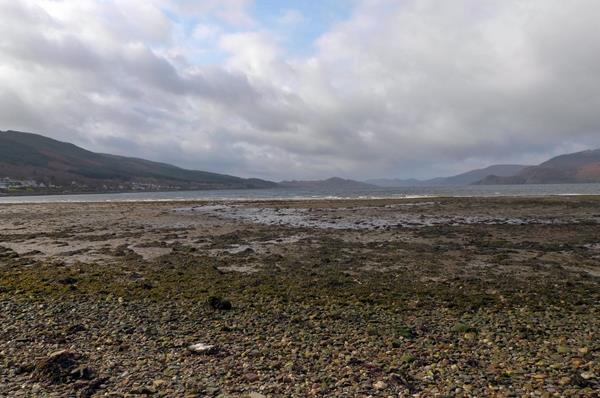
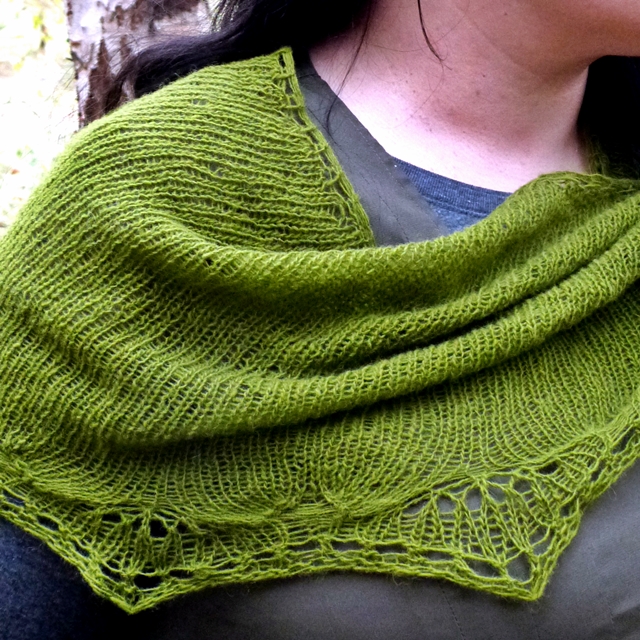 Tomorrow I am releasing the last Doggerland pattern (more on the actual pattern when it's released!) and it is a bit emotional.
I first started working on Doggerland in 2011. The first few sketches were rough outlines of motifs, but soon I began sketching all sorts of things: shells, driftwood, coastal outlines.. then I started reading about Mesolithic archaeology, I met with archaeologists, I delved into
Tomorrow I am releasing the last Doggerland pattern (more on the actual pattern when it's released!) and it is a bit emotional.
I first started working on Doggerland in 2011. The first few sketches were rough outlines of motifs, but soon I began sketching all sorts of things: shells, driftwood, coastal outlines.. then I started reading about Mesolithic archaeology, I met with archaeologists, I delved into 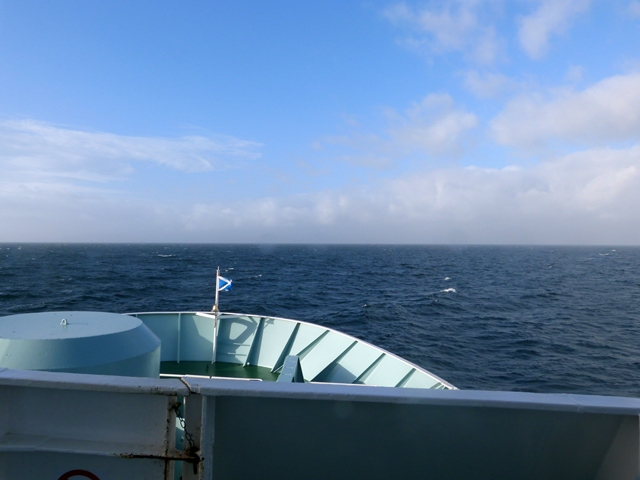
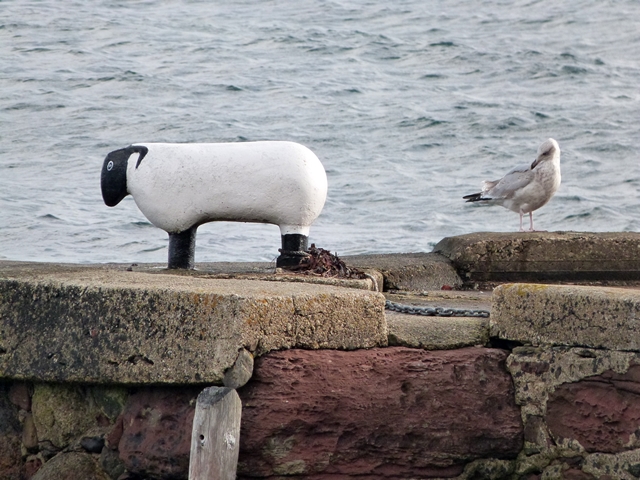
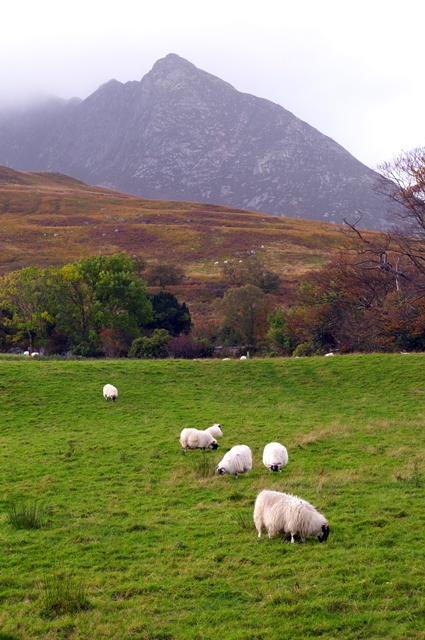
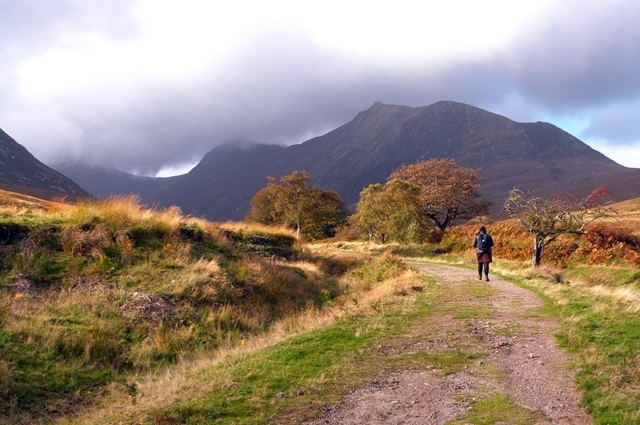
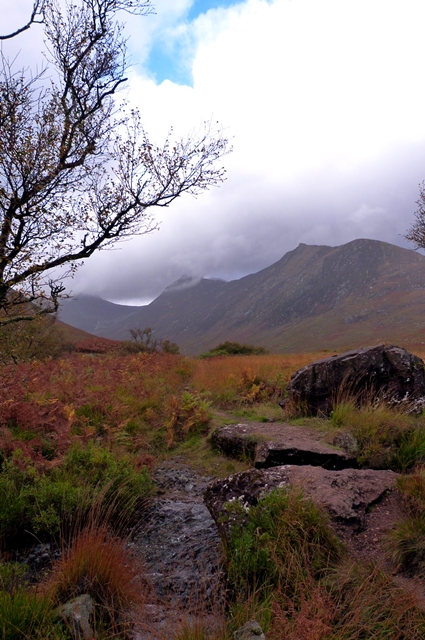 We walked towards Coire na Ciche (The Devil's Punchbowl) with the slopes of Goatfell on our left and the peaks of Cir Mhor and Caisteal Abhail in front of us. I was worried about how my injured left knee would hold up (especially as the path was not as gentle as we had imagined) - but although I was in pain, I did not have to resort to the heavy-duty pain killers and my knee only caused me to stumble occasionally.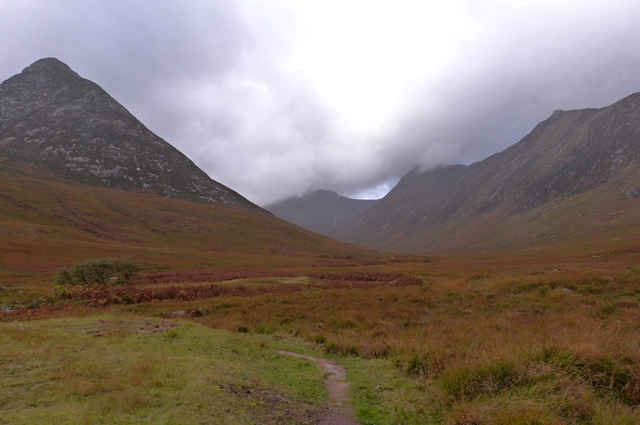

 If you tried to visit this site recently you will have noticed that a) you couldn't connect and b) now that you can connect, some of the content is missing. The company that currently hosts this site had big issues with a server and finally recovered most of the site after nearly 24 hours. Most. I lost a couple of photos and about a month's worth of blog posts. It could have been much worse. I once lost four years of blogging thanks to my Danish web host going bust.