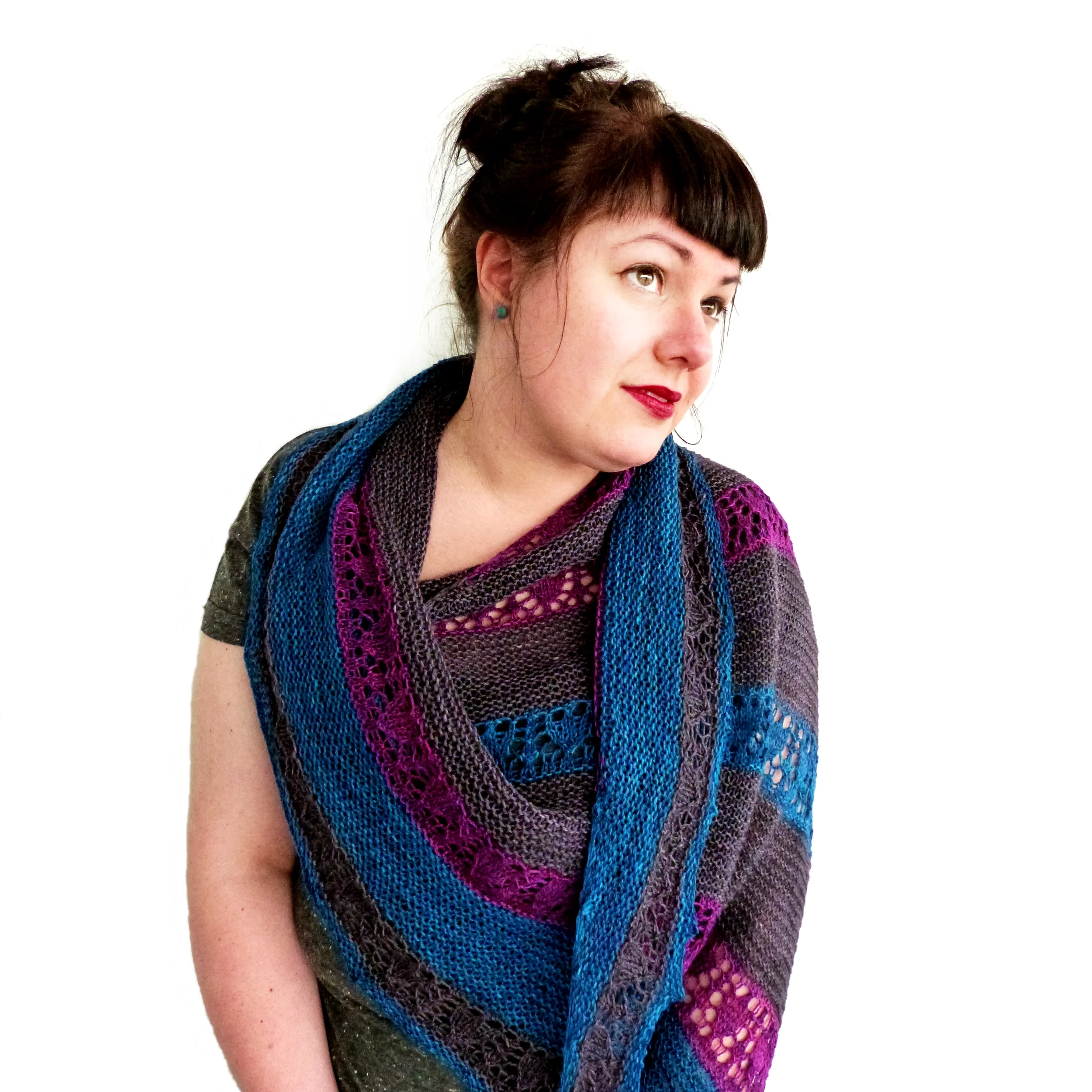
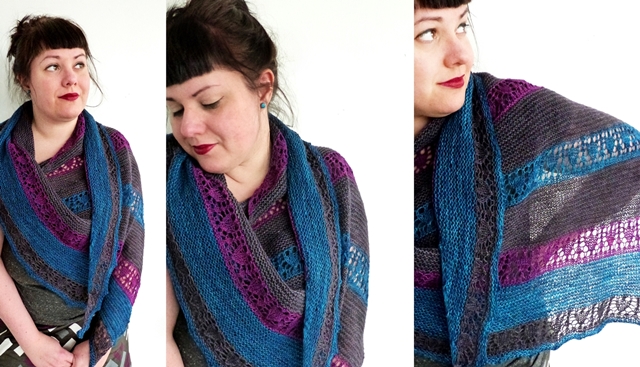
 Helen Lockhart of Ripples Crafts dyes exquisite yarns from her home in the Scottish Highlands. I first met Helen at a knitting conference when her stall was next to mine. We bonded immediately, so I cannot believe that it took us nearly five years to finally collaborate. We decided on our collaboration at In The Loop. I fell deeply in love with the blue-teal shade (Stormy Seas) and the rest followed. The rich magenta (Jewelled) and the warm grey (Assynt Peat) worked perfectly in unison. Working with her Quinag base was an absolute joy. The BFL gave Helen's colours additional depth and the yarn flowed through my fingers.
The construction of Frances Herself will be familiar if you knitted my Byatt shawl (though it works in a slightly different way). You increase alongbthe top edge at an accelerated page which makes the shawl grow very rapidly in one direction and at a more considered pace in the other. It makes for wonderful asymmetry when worn - yet it is surprisingly straightforward to work. I do not believe in overcomplicating patterns when wonderful results can be achieved in a straightforward manner!
A lot of the Frances Herself joy is derived from working with such wonderful handdyed yarns. Frances Macdonald McNair was a child of the Arts & Crafts movement and its truth to material ideas. Truth to material simply means that you take the material that is best suited to your project and you showcase it honestly. The shawl is designed to reflect that. I am a big fan of basic stitches (like stocking stitch and garter stitch) precisely because they let handdyed yarns take centre stage.
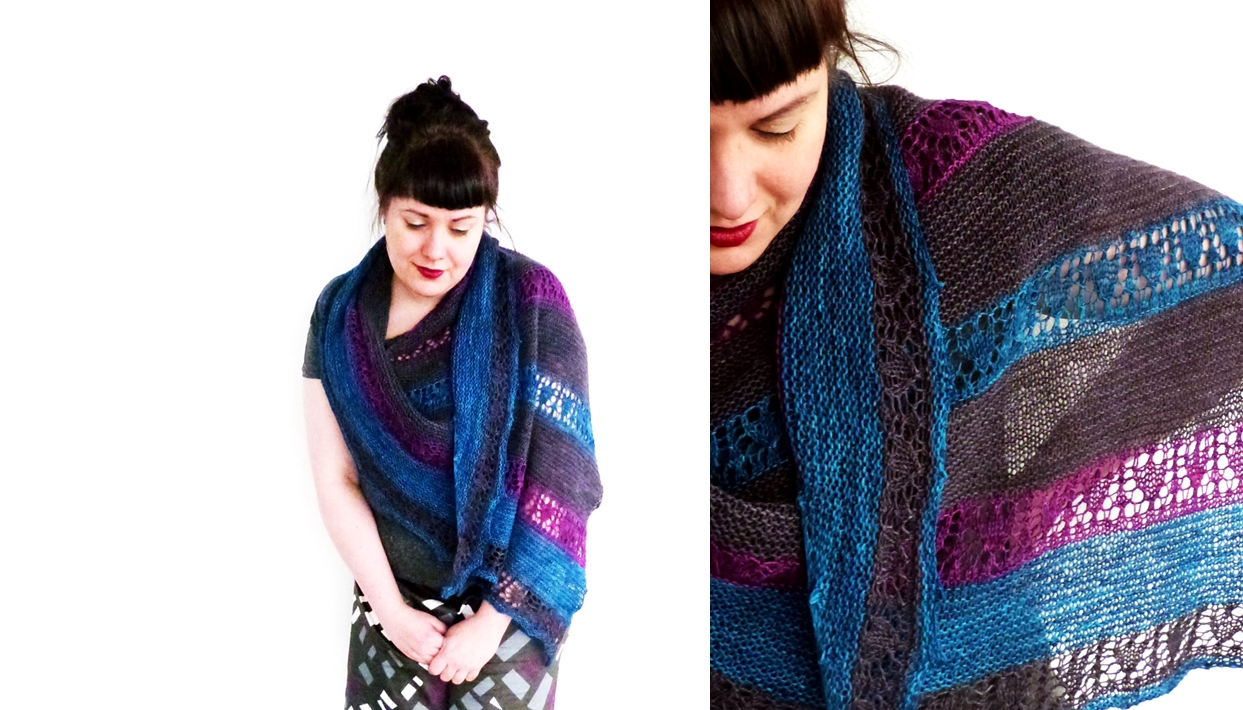
I have included a guide to modifying the colour sequence so you can make it work with your given yardage. I used three colours in this shawl - one neutral and two jewel-like colours. If you are considering other colours, think about getting enough contrast between the two contrast colours. You might also be tempted by mini-packs of yarn - Col B would be the obvious candidate for this - so keep the following yardage breakdown in mind:
Col A: Gray / Assynt Peat (approx. 380m/ 415 yds) Col B: Magenta / Jewelled (approx 180m/196 yds) Col C: Teal / Stormy Seas (approx 180 m/196 yds)
Another modification you might like is beading. Frances Macdonald McNair used beads extensively - both as material and as visual metaphor. I opted not to add any (mostly as I was travelling when knitting my shawl and there is no worse combination than beads & a bumpy road) but it'd look incredible done right. If you want to add beads, I suggest doing it in the middle of the garter stitch sections with the beads nicely spaced out. I would also suggest choosing beads that reflects cols B and C - you do not have to agree!
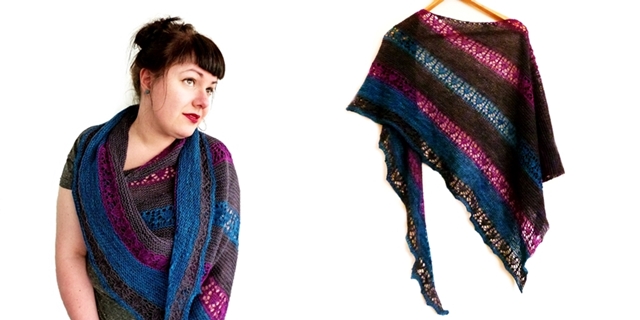
The shawl was knitted on 4.5mm needles which the beautiful 4ply yarn was more than capable of handling. I strongly urge you to swatch if you substitute with any other 4ply yarn (and also to check your yardage!). The open fabric has a lot of drape and character, yet it still retains a sense of itself. I love how the lace pattern blocked out - it looks like tiny tenement tiles which is so very apt for a pattern inspired by Arts & Crafts in Scotland.
You can buy the pattern here. If you are going to Edinburgh Yarn Festival, make sure to check out Helen's stall where she'll be happy to advise on colour combinations (and we might have more up on our collective sleeve!).
 The first artist in my Authors & Artists series is Frances Macdonald McNair (1873-1921). She was born in England and attended the prestigious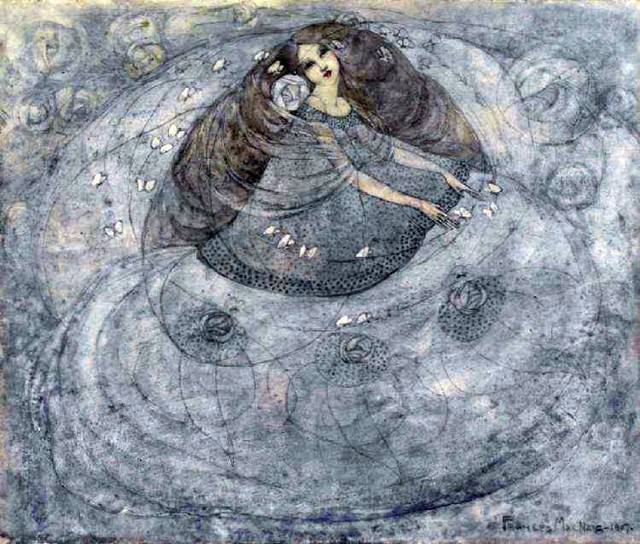

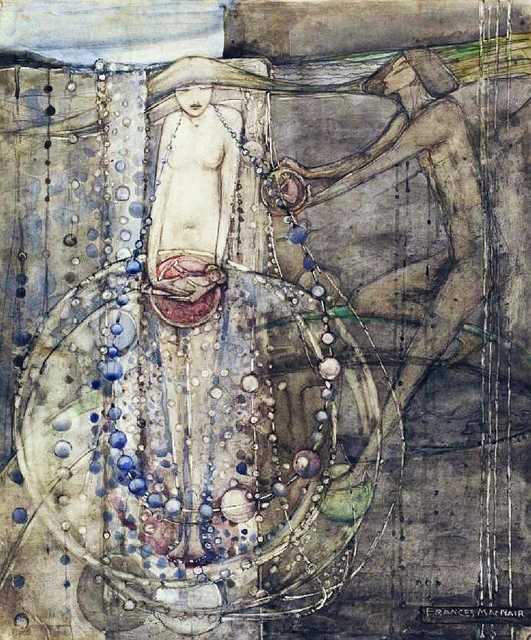
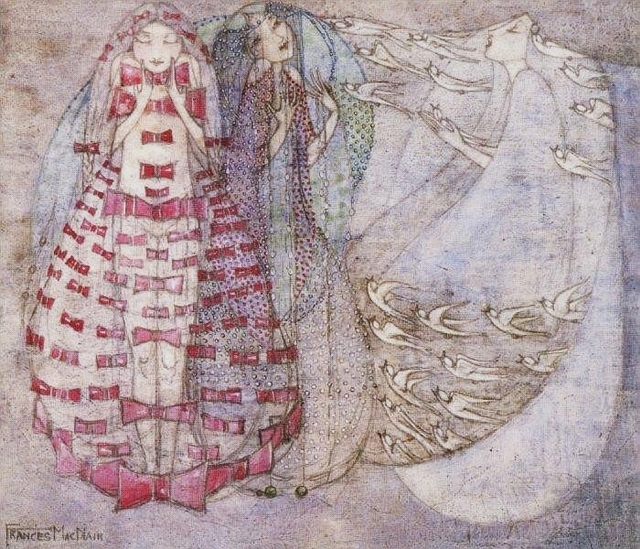
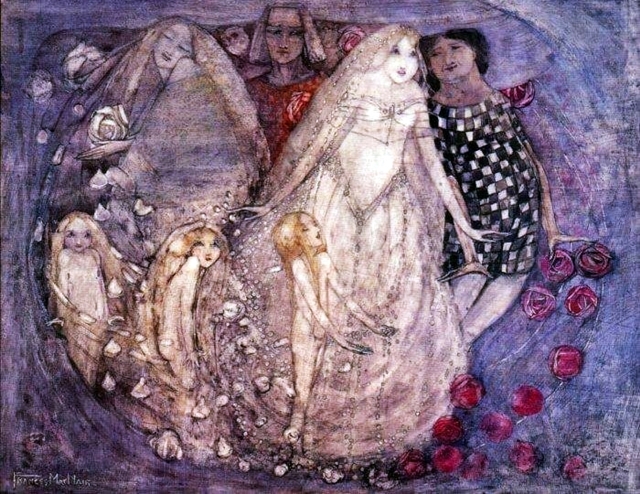 This is an image by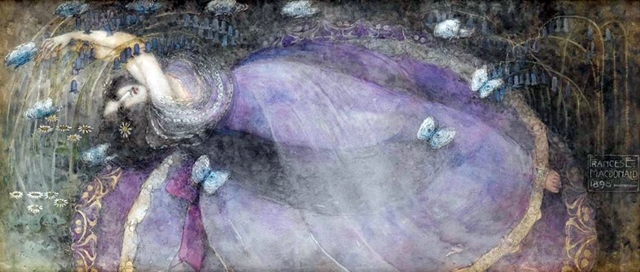
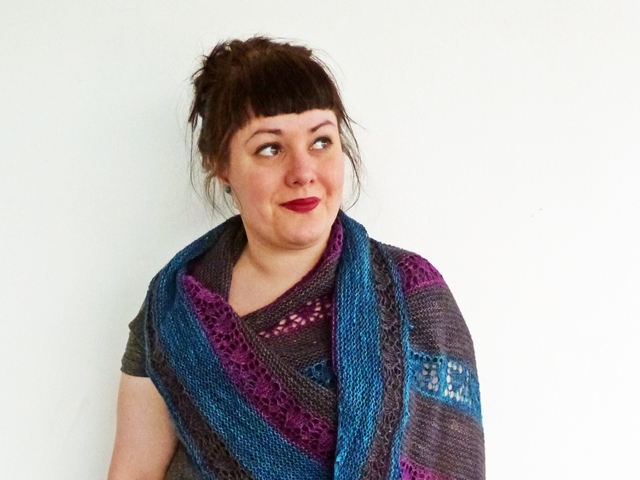 Happier times ahead. We had a photo shoot yesterday for this asymmetrical shawl knitted in three colours of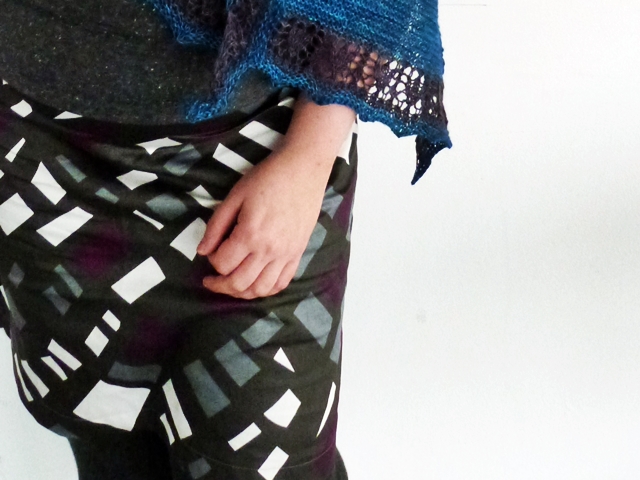
 Earlier this month we had some very sad news. David's father fell ill and passed away unexpectedly. We went north to a small Aberdeenshire fishing village to join the rest of the immediate family in preparation for one of the hardest days a family can face. David's father was a man who made a difference to other people's lives. We heard from hundreds of people how he had encouraged them to be the very best they could be; how he had made people laugh; how he was a friend to everyone he met; and how his generous, keen mind transformed lives. As a family we loved him deeply - we learned that our love was shared by not just the local community but also by the generations of children he had taught. To me, he was both family and one of the finest friends anyone could hope to have. I had a long conversation with him just a week before he passed away. We spoke of our hopes and fears. As always, he urged me to believe in myself and told me put my trust in other people.