Personal

Tutorial: Lace Charts 2 - How to Read a Basic Chart

I like my patterns to be inclusive, so I try to offer them with both written and charted instructions. However, sometimes (like the Mahy shawl) a chart is the best way of offering concise and precise information. I know many people don’t like charts, but I hope this series of tutorials will go some way to demystify charts and explain how to use them.  This post is about how to read a basic chart. The chart is very straightforward - no shaping and no extra stitches being added. If you like this stitch pattern, you may enjoy my Florence scarf (it's free and only takes one ball of fluffy yarn).
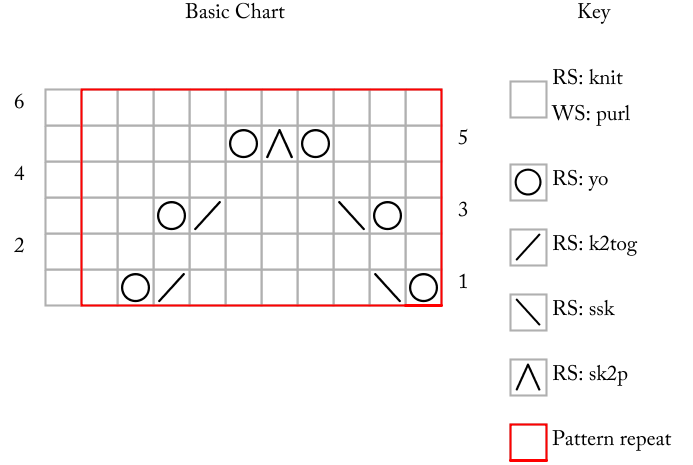
Basic Chart

Reading a chart can be really daunting. Unfortunately chart symbols are not standardised and so you need a key which explains what the various symbols mean. Always check the key to make sure you know what the symbols mean. 

Tip: If you find it hard to remember what the various symbols mean, or if you keep mixing up two symbols, make a copy of the chart and assign a colour to each symbol. Grab highlighter pens and start colouring in the chart. It's a nice little brain-hack.
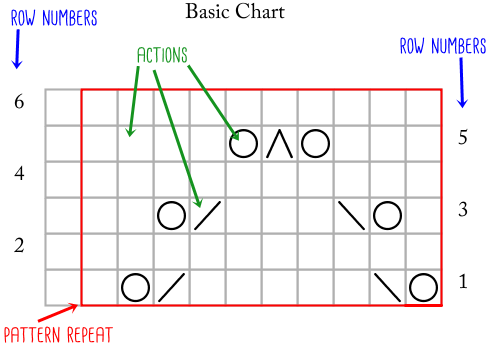
Basic Chart_actionsand layout

Now let's look at the chart itself.

Row numbers are important because they tell you which is the RS and the WS rows. RS rows have numbers on the right-hand side. WS rows have numbers on the left-hand side. We'll come back to why this is important in just a second!

Pattern repeats are outlined. Normally the outline is red, but you may come across a fat, black line being used if the pattern is provided in black & white. The outline is exactly the same as the repeat from *.. you are used to from written instructions. In this case, you can see this is a 10-stitch/6-row repeat. You repeat the ten stitches over and over, until you finish with one stitch (the one outside the repeat).

Action is how I think of a square in a lace chart. Each square represents an action you must take when you get to that stage. Many people think that each square represents a stitch, but sometimes you work more than one stitch per square or do not work a stitch at all. A right-slating line means you are knitting two stitches together; a V (not represented) typically means you are slipping a stitch from one needle to another.

When you work a lace chart, you move from one action to another. One of the biggest advantages of a chart is that it shows you how actions stack on top of one another, creating a stitch pattern. The visual mimicry of the chart symbols often mean your fabric will resemble the chart!
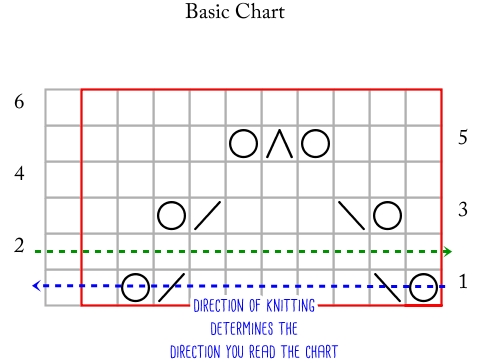
basic chart_direction

The two biggest problems of reading a lace chart is A) where to start and B) how to know which direction you read the actions. Many people think you start by reading a chart like you'd read a piece of English-languaged text: top left and reading left to right. This is incorrect. And this is where we go back to talking about row numbers because row numbers are your friends.

A chart mimics the knitted fabric and your first row will therefore always be at the very bottom. The row number shows that you start at the right-hand side and work your way left. This corresponds with how you work the stitches too: you move your stitches from the left-hand needle to the right-hand needle. When you work the WS rows, you will have turned your work, so you need to turn/revert the direction in which you are reading the actions. Again, the row numbers are your anchors as they will show you where the given row starts!

So in short:
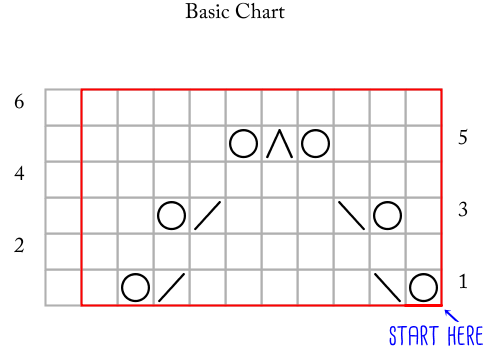
Basic Chart_starthere

This post is part of my Lace Chart tutorials.

Lace Charts 1 - The Anatomy of a Lace Chart. Lace Charts 2 - How to Read a Basic Chart Lace Charts 3 - How to Read a Shawl Chart Lace Charts 4: Chart Tricks & Knitting Hacks

Hope you found this useful! Next time we'll be looking at how to deal with 'no stitches', shaping, and how to customise your lace chart reading. As always, comments and questions are welcome! Kx
No Pressure, Karie, No Pressure.

June 2015 157Another photo shoot beckons. I am a perfectionist and I haven't been happy with the photos we've managed to get so far. The first shoot was basically us trying out a couple of locations. Obviously the first location we tried turned out to be my favourite - isn't it always so? - but we had only shot a couple of photos. I wanted more. So, yesterday we headed out for another shoot. I was tired and I think it showed in the images.

I used to joke about modelling being a real job, but now I know it's actually hard work. Usually our shoots lasts between fifteen to forty-five minutes: you have to account for the light, get a variety of shots, get pattern details, and find that magic connection between yourself and the camera. So, going into a shoot with a tired body and a tired brain wasn't the best thing.

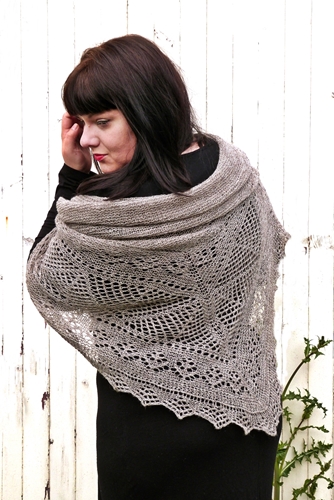
But this is your first real glimpse of Mahy, isn't it?

I absolutely love this shawl and I think this is one of the reasons why I've been so hard on the photos. I want to capture just how special this feels to me. I want the photos to convey just how amazing it felt to knit the shawl and how fantastic it feels to wear it.

No pressure, Karie.

Southwards Bound - pt 2

So. London to Cambridge and back to London. I had considered adding Brighton to the itinerary, but I am very glad I decided against it. The weather was hot and clammy - and it sucked all the energy right of me. Instead of doing the thousand things on my list, I opted to visit The National Gallery which I hadn't visited for nearly twenty years. I knew it would be cool, relatively free of crowds and very restorative to my sanity But first a gratuitous photo of The Thing which is currently blocking.

June 2015 181

A grey woolly blob pre-blocking transformation. I like the early evening light.

The National Gallery in London had played a big part in my days of living in London two decades ago. I spent much of my free time wandering through the galleries and several paintings had become old friends by the time I left. It was a great joy to see these paintings again - a certain Titian, Fra Filippo Lippi's The Annuciation (it had not lost any of its power and mystery) and Paul Cezanne's Les Grandes Baigneuses (Cezanne's painting took on extra meaning for me this time as I'm now so familiar with J.D. Fergusson's Les Eus). But I kept coming back to a simple portrait by Albrecht Dürer.

June 2015 285

Detail from The Painter's Father by Dürer. This portrait is over 500 years old and it is still so achingly alive.

But my favourite discovery at NG was the mosaic floor in the Main Vestibule. I spent a lot of time looking at it (much to the bemusement of other visitors).

June 2015 343

Detail from The Awakening of the Muses (1928-1933) by Boris Anrep. That man bears an uncanny resemblance to TS Eliot.

After the National Gallery, I headed next door to the National Portrait Gallery. I tend to visit NPG whenever I am in London - it is the perfect size for an impromptu visit and yet I see something new every time. This time I was struck by a painting of Aleister Crowley - the yellow colour vibrated and clashed beautifully against the red robe. I'll need to see it again.

And then I headed out to Hackney to teach at the very delightful Wild & Woolly yarn shop. I always say that yarn shops reflect their owners - Wild & Woolly is owned by Anna who I liked on sight. We sat down with a pot of tea and proceeded to have a fantastic in-depth talk about knitting as lifestyle, knitting as art form, and knitting as pleasure. And the shop reflects Anna's warm personality, sense of humour and eye for detail.

June 2015 349

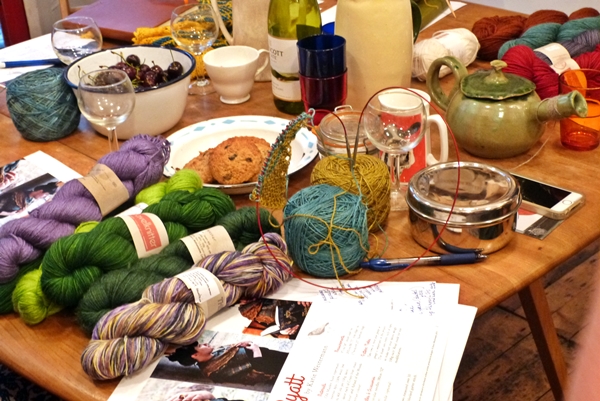
I was teaching a class on my Byatt shawl - and it was a blast. we talked colour choices, techniques and how to knit lace at the pub. The students were all lively and funny. A very brief hello from Larissa and I wish I could have stayed longer - always a good sign - but I had to dash into the dark of night as I was staying with my good friend Ben who lives quite a trek from Hackney.

And so I spent my very last hours of my time in London talking gender identity, privilege and Men Who Knit with Ben. We've known each other for years and I don't see him often enough. I don't see many friends often enough, actually, as they are all spread out across the world (that's a complaint for another day).

June 2015 360

Exotic travel: Birmingham

June 2015 417

Somewhere north of Preston.

June 2015 374

Almost sure I travelled across that viaduct on my journey to Settle just two weeks ago.

June 2015 433

Oh Scotland. Home.

I have been travelling a lot the past month or so. As a confirmed introvert (and homebody) I can feel I need some time to recover from adventuring. I do try to soak up as many impressions and ideas as I can while I am travelling - but then I need time to sort through them all. The good news is I have finished quite a few things and I'll be able to share a new design with you very shortly. Yes, it's the grey blob shown above and no, it is no longer a blob but a Very Beautiful Thing.

A big thank you to everybody I met on my travels south - the people who came to my classes; Anna and Sarah who both jumped at the chance to host my workshops; Joanne and Ben who let me stay at their places; and all the lovely strangers who talked to me because I was knitting. I salute you.

Southwards Bound - Part 1

Mid-1990s I lived in London. The timing was impeccable; it was the year that Blur released Parklife, Pulp finally broke through with His'n'HersManic Street Preachers released the seminal The Holy Bible, and Suede completed Dog Man Star (one of my all-time favourite albums to this day). I was on the periphery of all these things, but a brief moment in time I lived where a major cultural shift was gathering strength before sweeping away everything in its wake. It is so odd to return to London now because the London of those halcyon days no longer exists. I have been back many times since the 1990s and, every time I visit London now, it feels like the city is slipping further and further away. London still exists but its heart is now on the outskirts of the city. June 2015 125

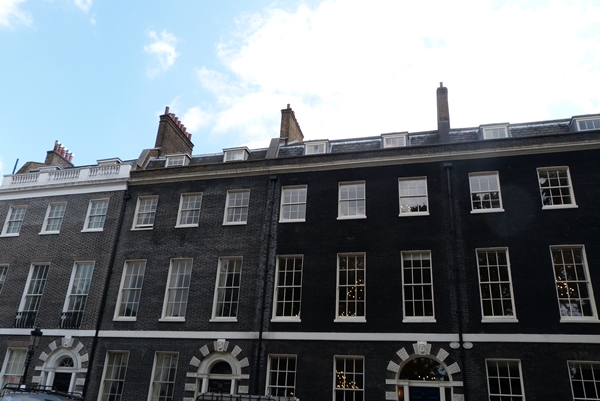
Shades of grey in the Bloomsbury area

June 2015 005

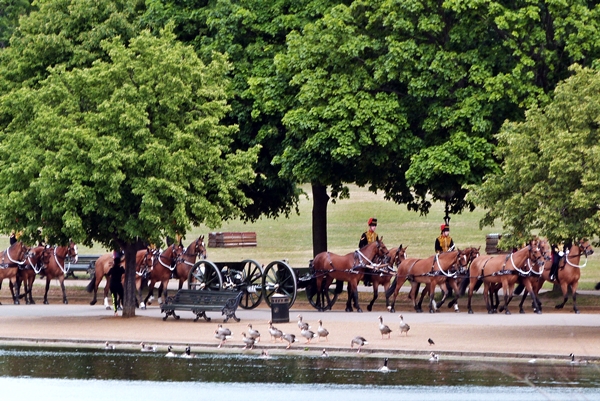
Pomp & circumstance in Hyde Park. I was walking back from an appointment at the embassy.

June 2015 105

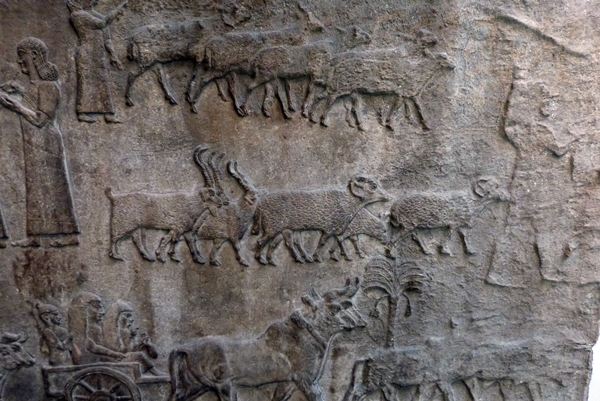
Assyrian stone relief; British Museum. These depictions of sheep are important to Indo-European linguists, by the way.

June 2015 060

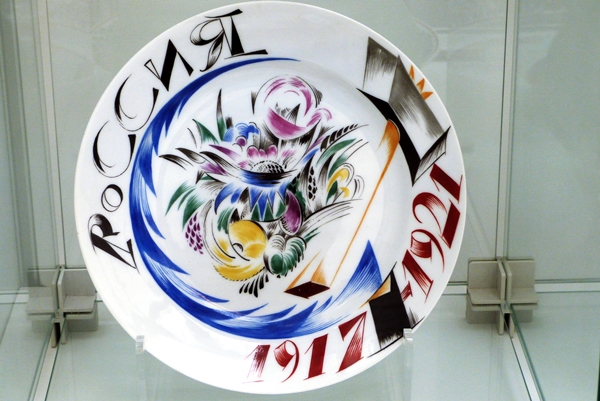
Early highlight: Soviet revolutionary ceramics at British Museum.

After spending less than two days in London chasing my own tail, meeting with embassy staff, and doing research in the British Museum, I left for Cambridgeshire where my good friend Joanne Scrace lives. Staying with her proved to be the perfect antidote to all the razzmatazz of the capital (sorry, had to get another Pulp reference in there).

June 2015 155

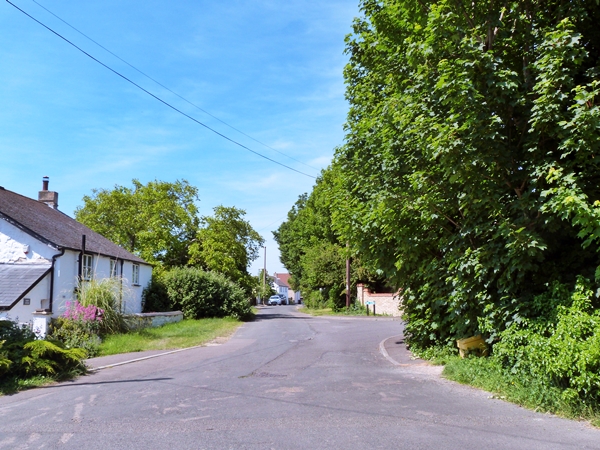
It spooked me slightly how much this looks like where I grew up.

After staying with Joanne & her gorgeous family, my batteries were recharged and I went to teach Nordic Knitting at Cambridge's beautiful The Sheep Shop.

June 2015 147

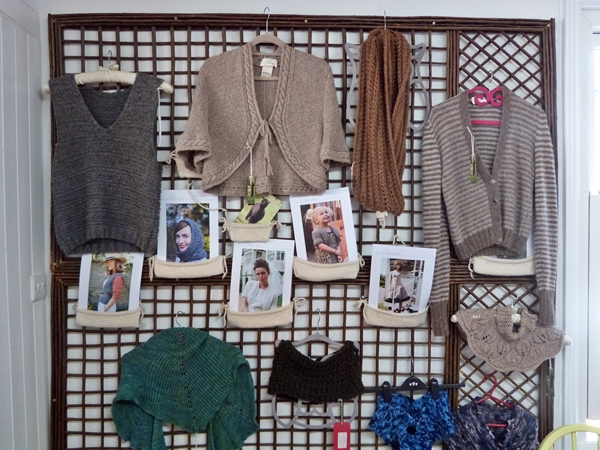
Beautiful display - The Sheep Shop was full of gorgeous samples.

June 2015 149

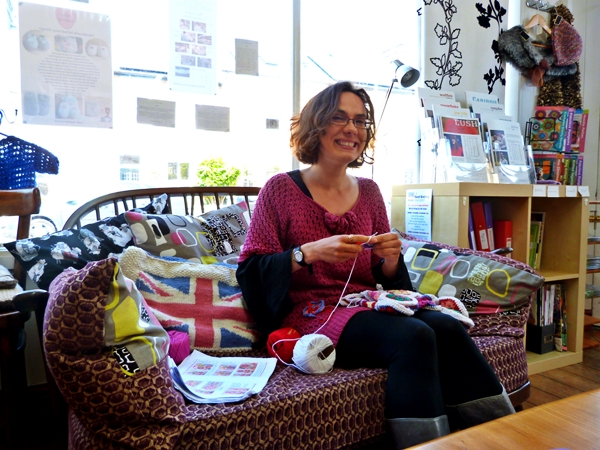
Sarah of The Sheep Shop - full of warmth and personality.

I had a fabulous time teaching the class - the students were smart and asked on-the-nose questions. I am only sorry that I could not stay longer and get to know everyone better. Hopefully this won't be my last time teaching in Cambridge!

I'll leave my return to London and my second class for another blog post. I have much to share - including some details about an exciting KAL and a brand new design.

There & Back Again - Or, It Is Good To Be Home

If you are a knitter, you have friends no matter where you go. Last week I went to London & Cambridgeshire and I was so pleased to meet many new friends. I'm going to do a proper blog post about the workshops I taught, the yarn shops I visited, and the things that happened inbetween - but I am yet to unpack my suitcase and do my laundry. June 2015 354

I will be dealing with my inbox tomorrow - today is all about catching up with other things (and enjoying that coffee is 'on tap' once more - oh caffeine, how I have missed you).

It's good to be home.

If You Are Going to the Woods Today..

bluebells A short and sweet post from me. I have a proper knitting post lined up for tomorrow, but this one is an important one.

It is tick season in the Northern hemisphere. My eye was caught by this BBC article about the European Space Agency backing work on mapping Scottish tick hotspots. The article is pretty good but also carries a really unfortunate image of a bullseye rash.

Here's the low down.

Ticks are tiny arthropods who like to suck blood from humans and animals. They range in sizes - the young ones are tiny and the size of a pin head. Grown-up ticks have a characteristic light brown body. Most ticks are harmless and won't harm you or your animals. Unfortunately a small number carry a bacteria called Borrelia burgdoferi - this bacteria transmits Lyme Disease or Lyme borreliosis. And you really don't want to contract that.

How to Protect Yourself & Loved Ones from Tick Bites

  • Don't walk through long grass or brush against foliage.
  • Wear long trousers and long-sleeved shirts if you are outside. Tuck your trousers into your socks.
  • Wear light-coloured clothes so any ticks crawling on you can easily be detected (remember some of them are tiny)
  • Wear gloves when brushing yourself and your loved ones down before going inside
  • Check for small black dots and full-grown brown bodies in dark, damp and moist places- i.e. behind your ears, in your hairline, armpits and bikini line.
  • If you find a tick, you can try to remove it.

Remember that a tick bite does not mean you will automatically become ill! Don't panic but act responsibly.

So You May or May Not Have Been Bitten By a Tick

  • If you develop flu-like symptoms over the next six months, go see a doctor.
  • Symptoms of a Lyme borreliosis infection include rashes, headaches, facial paralysis, ear pain, fever, disorientation, joint pains etc.
  • People go on about bullseye rashes being a key symptom - not everybody develops this rash!
  • Lyme borreliosis is treatable with antibiotics and early intervention is key.
  • Read more here. Google responsibly (there is a lot of awful information and hand-waving out there).

I was bitten in the summer of 1996 and know first-hand what a tick bite can do to you. I only sought medical help after several months of unexplained ailments - don't be as stupid and naive as me. Go out, enjoy nature and be smart about protecting yourself & loved ones.

Much love.